Where Did That Laptop Go? Why Businesses Need a Real Asset Management System
Where Did That Laptop Go? Why Businesses Need a Real Asset Management System
Every growing business eventually hits the same moment: someone asks "who has the spare projector?" or "didn't we buy three of these laptops last year — where's the third one?" — and nobody has a confident answer. Company assets, from equipment to furniture to devices, tend to get tracked the same way everything else does before a business matures: informally, inconsistently, and often not at all.
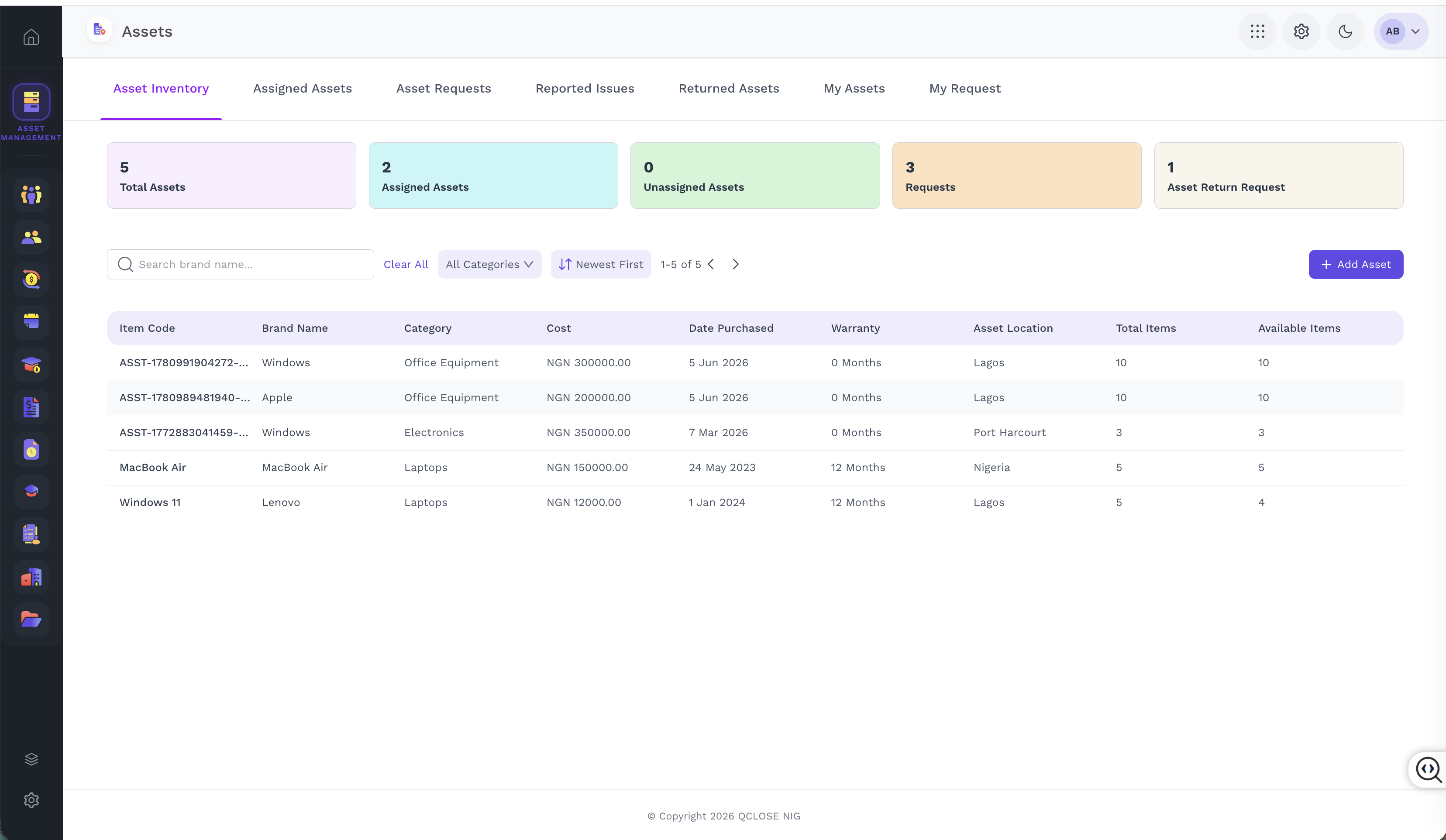
That's the exact problem Asset Management, one of EJA ERP's add-on modules, is built to solve.
The Real Cost of Not Tracking Assets
Most businesses don't lose assets dramatically — they lose them quietly, one small gap at a time:
- Equipment "borrowed" and never returned, with no record of who has it
- Duplicate purchases because nobody could confirm whether an item already existed somewhere in the business
- No maintenance history, so equipment breaks down without warning instead of being serviced on schedule
- Assets that just disappear during staff transitions, office moves, or department changes, with no paper trail to follow up on
None of these individually feels like a crisis. Together, over a year, they add up to real, avoidable cost — both in wasted money and in the time spent trying to reconstruct what happened after the fact.
What Asset Management Inside EJA ERP Solves
As an add-on module within the broader EJA ERP platform, Asset Management gives businesses a structured way to track and manage company assets rather than relying on memory, informal logs, or scattered spreadsheets. Instead of assets existing outside the business's core operational record, they become part of the same system as everything else — staff, departments, and requisitions.
That connection matters more than it might seem:
- Assets tied to departments and employees — because Departments and Employee records already live in the same platform, knowing who's responsible for a given asset doesn't require cross-referencing a separate system
- Purchases connected to requisitions — new asset purchases can tie back into the existing Requisition & Invoice workflow, instead of living in a disconnected purchase order somewhere else
- One source of truth — instead of "I think IT has a spreadsheet somewhere," asset records live in the same platform everyone already uses for HR and operations
Why This Matters More as Businesses Grow
Asset tracking is easy to ignore when a business is small enough that everyone just knows who has what. But that informal system breaks down fast — a new hire doesn't know the unwritten rules, a department move loses track of who took what, and by the time a formal audit is needed, reconstructing accurate records becomes a significant time sink.
Bringing asset tracking into a proper system earlier avoids that scramble later. It also creates accountability: when an asset is clearly assigned to a person or department in a shared system, it's far less likely to quietly disappear.
Who This Is Built For
- Growing SMEs accumulating equipment, devices, and furniture faster than their informal tracking can keep up with
- Organizations with multiple departments or locations, where assets move around and informal tracking breaks down quickly
- Businesses already on EJA ERP looking to extend the same platform into physical asset accountability, rather than adopting a separate standalone tool
Getting Started
For businesses already running HR, timesheets, or invoicing through EJA, it's a natural extension — bringing physical assets into the same operational record as everything else the business tracks.
Already using EJA ERP? Subscribe to Asset Management from your dashboard. New to EJA? Explore the platform to see how it all connects.